Why use motorcycle shop software instead of a register?
Bike service is frequent and cheap per visit, so a shop lives on volume and repeat customers. A rider who gets a tune-up every 1,500 km visits many times a year. Motorcycle shop software earns its place by making each of those small bills fast and by bringing the rider back before the bike starts giving trouble.
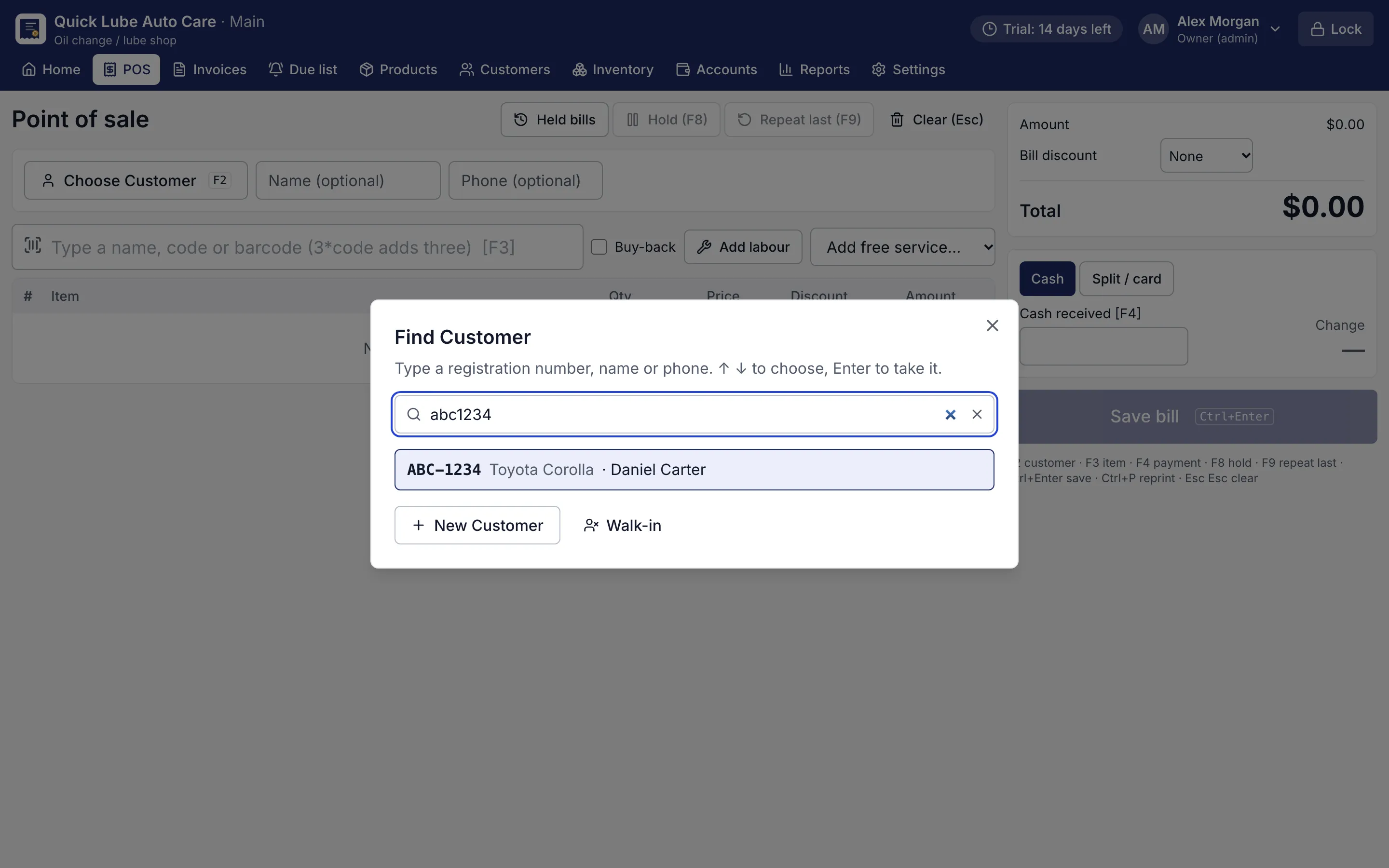
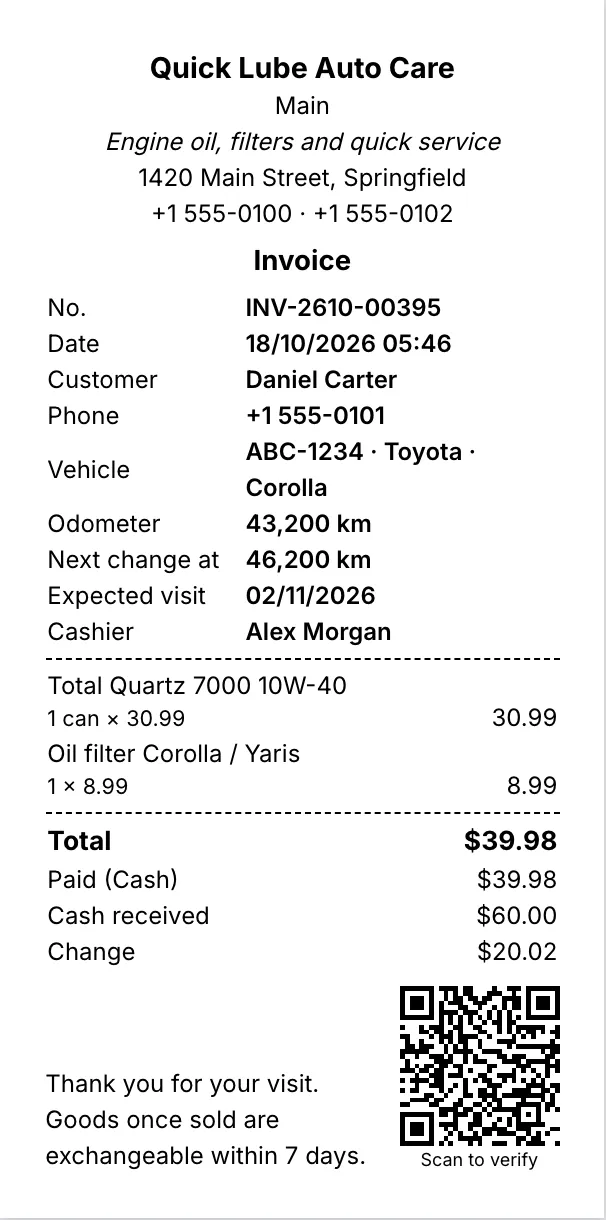
RMS links every bill to the bike’s plate and odometer. When the rider returns, the counter shows the last service, the oil used and the last km. F9 repeats the last bill, so a regular tune-up with the same oil is billed in seconds.
How does the Due list work for bikes?
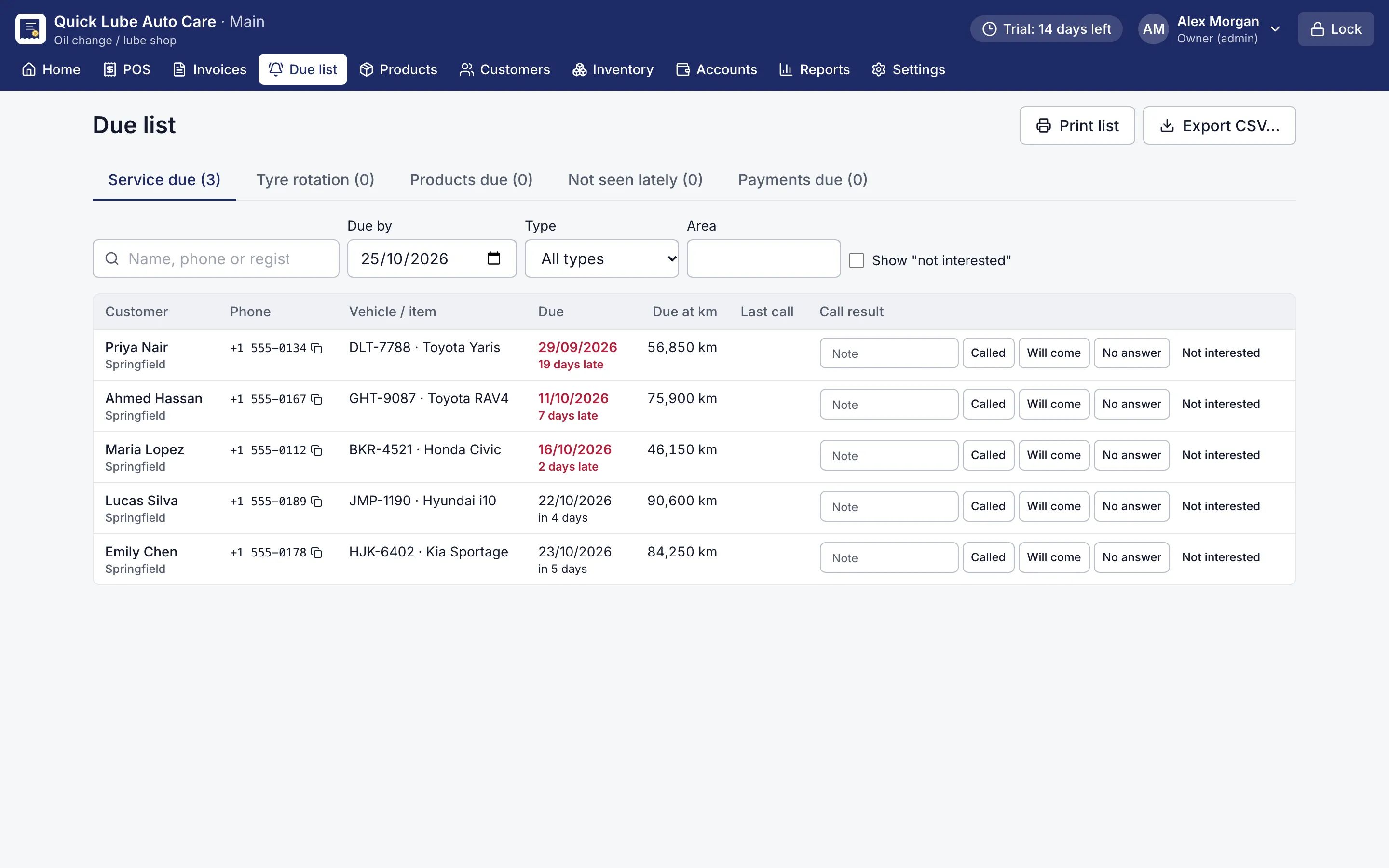
Each bike has its next service km. RMS learns how far the bike usually runs a day and works out when it will reach that km. If the rider has not come for a set number of days, the bike shows as due anyway. Every morning, the Due list gives you:
- bikes due for service, with the rider’s phone number;
- riders not seen for a while;
- customers whose credit is overdue.
Record what happened on each call (called, will come, no answer, not interested) and print or export the list. When the bike comes in, the reminder closes by itself.
What about parts, oil and customer credit?
Keep chains, sprockets, cables, brake shoes, tubes and oil in stock with low-stock alerts. Oil bought by the drum or carton can be sold loose, such as 0.8 L or 1 L at a time. Parts can carry their part numbers and the models they fit, so the right clutch plate comes up for the right bike. Free checks such as chain tightening and tyre pressure can print as zero-price lines on the bill.
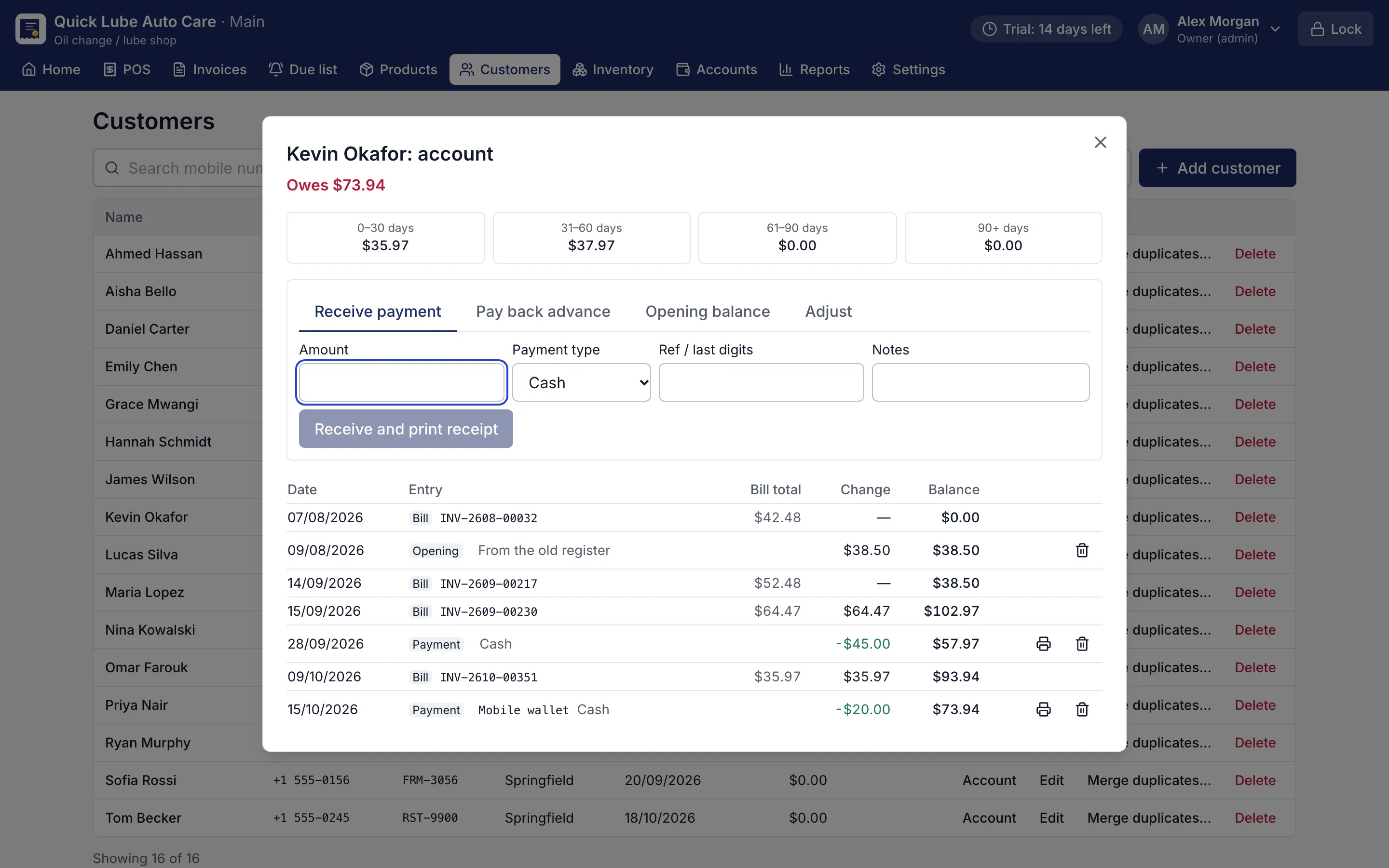
Regular riders and delivery companies can pay on account with a promised date. Every payment and bill appears on their account statement, and you can take payment by cash, card, mobile wallet or bank transfer.
Try it this week
RMS works without internet, so power cuts do not stop the counter. Choose “Bike shop” in the setup wizard, add a few regular riders and use every Pro feature free for 14 days, with no card needed.