
Skip to content
RMS

RMS for hardware shops

Hardware store POS for loose units, part numbers and credit

RMS is offline hardware store POS software for hardware, plumbing, electrical and paint shops. Sell wire by the metre or foot, nails by the kg or lb and paint by the litre or gallon, find fittings by part number, give contractors credit with limits, and set monthly targets for sales staff. It runs without internet.

Last updated 18 October 2026

What problems does it solve?

A day at your counter with RMS

  1. 1

    Find by part number

    Type the part number, code or name. The suggestions show the item and its rack.

  2. 2

    Sell any quantity

    Type 2.5 for two and a half metres of wire or 0.5 for half a kilo. Stock goes down in the same unit.

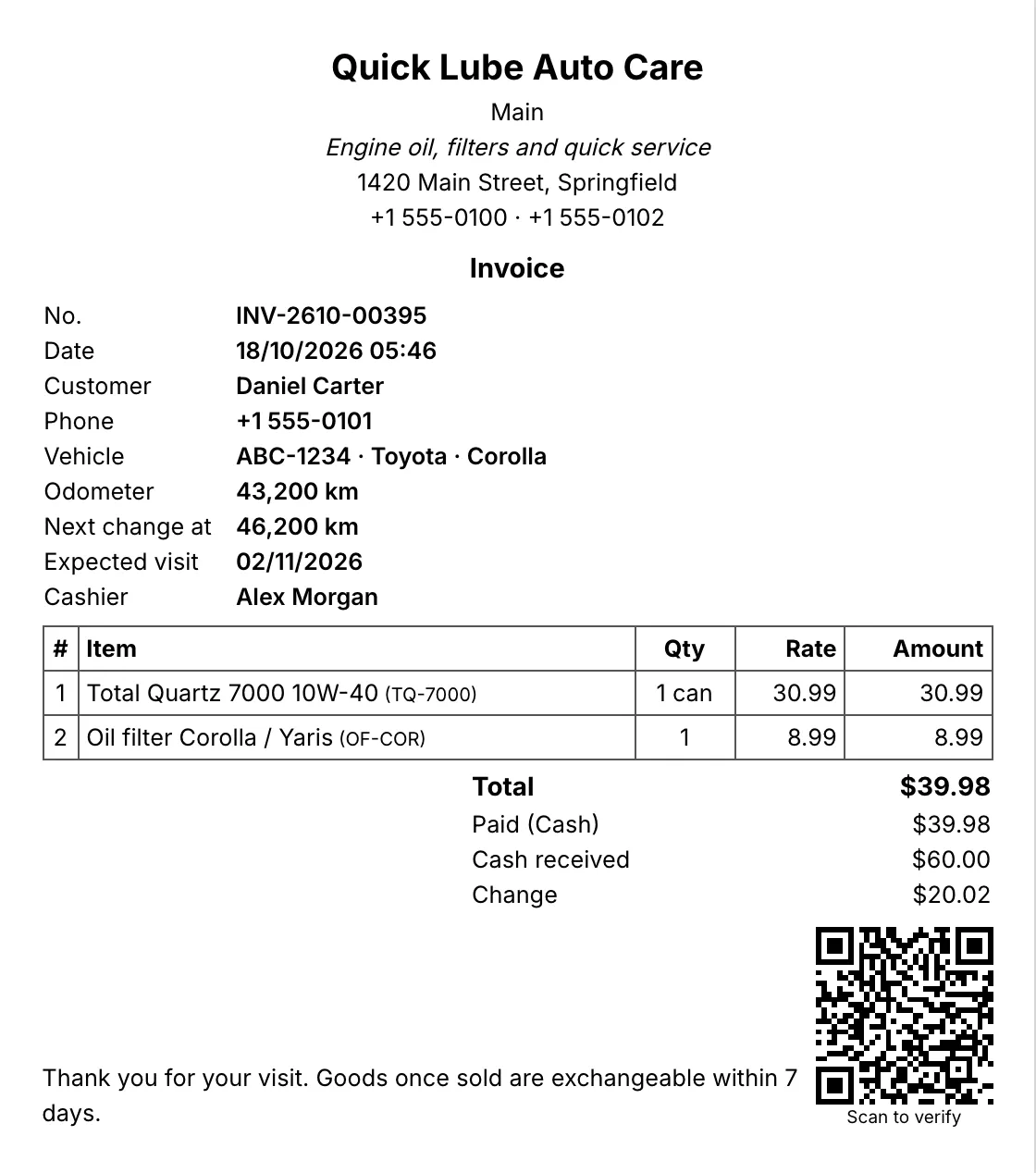
    A5 invoice with the shop's details, customer, vehicle, items and totals
    A5 invoice. A4, A5 or A6 invoices with your logo, tagline and footer.
  3. 3

    Credit for contractors

    Put the bill on the contractor's account with a promised date, against the credit limit set for them.

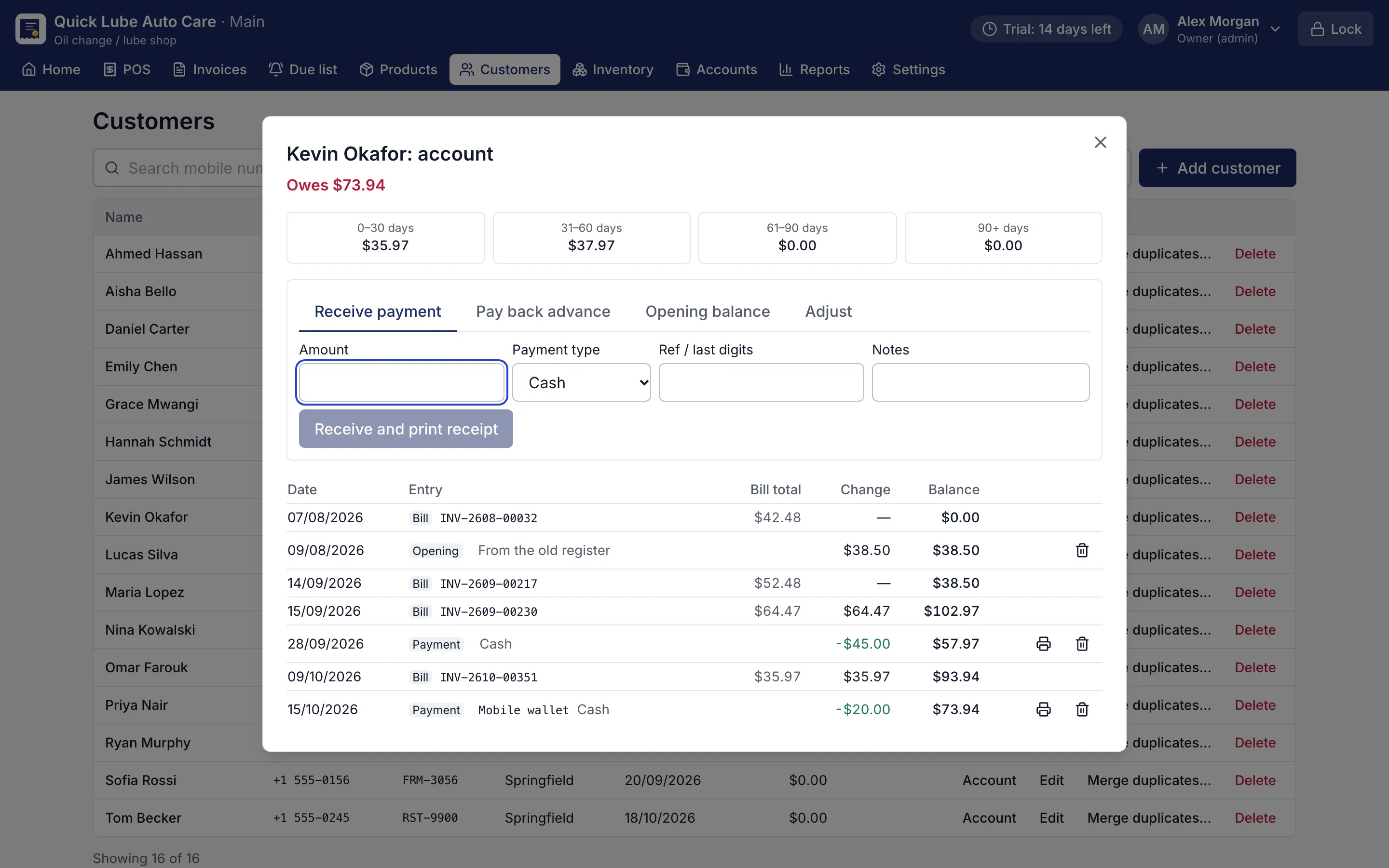
    Customer account statement with bills, payments and running balance
    Customer account statement. Every credit bill and payment with a running balance and ageing.
  4. 4

    Record the salesperson

    Choose the sales person on each bill so their sales count toward their monthly target.

  5. 5

    Reorder from suppliers

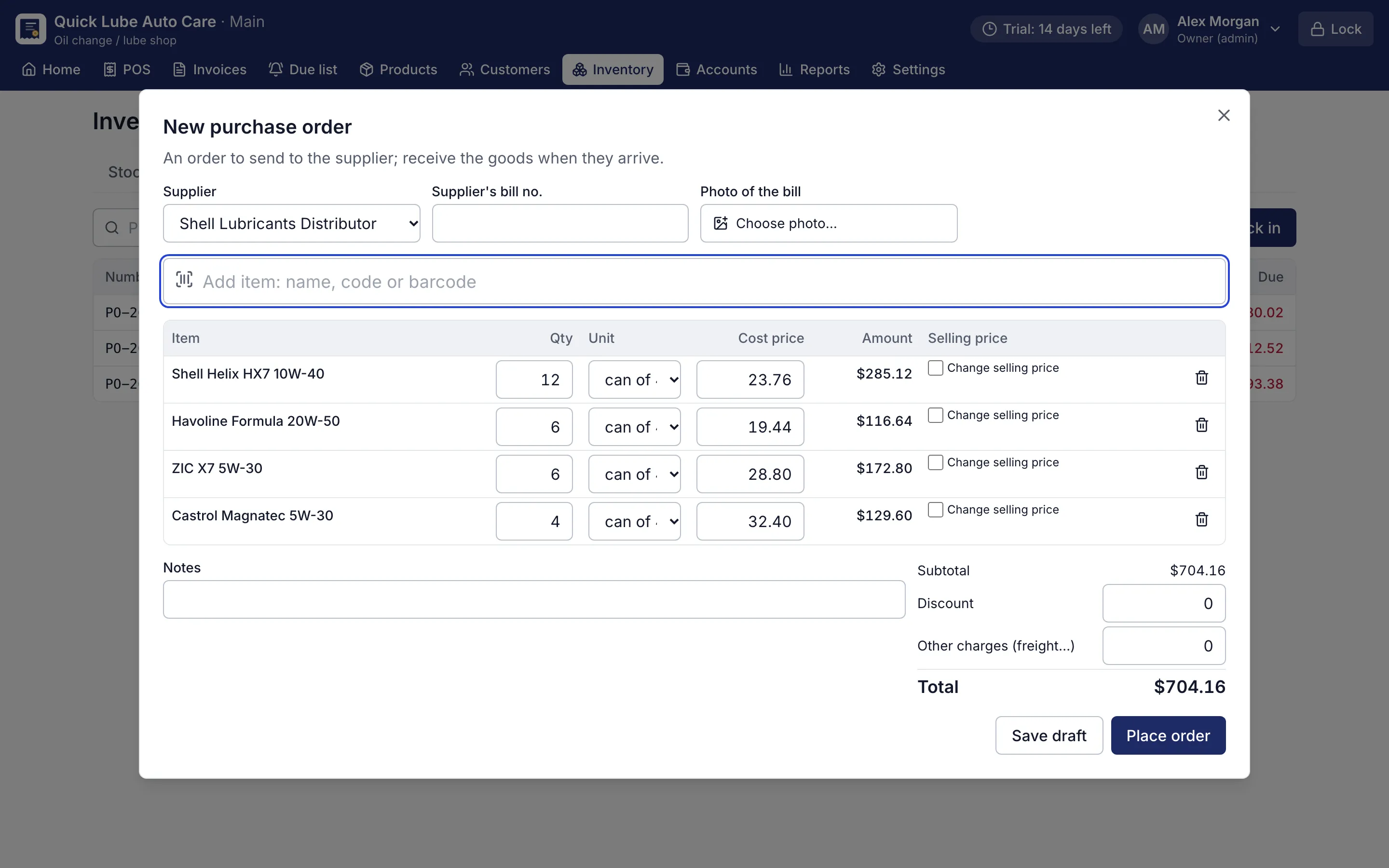
    The reorder list groups low items by supplier and fills a purchase order.

    Purchase order form with supplier, items, quantities and costs
    Purchase order. Orders received in parts, on credit, with the supplier's ledger.

What makes a hardware store POS different?

A hardware shop sells in odd quantities. Electrical wire comes in coils and goes out by the metre or foot. Nails, screws and binding wire come in sacks and go out by the kilo or pound. Paint comes in drums, gallon cans and tins. A hardware store POS has to keep stock right through all of that, or the stock count is useless after a week.

RMS handles this with units and loose items. Buy a coil or a sack as a pack, then open the pack and its metres or kilos come into stock at the pack’s cost per unit. At the counter, type 2.5 for two and a half metres and the bill and stock both follow. Buy by the carton and sell in pieces, packs or dozens with conversions such as 1 carton = 24 pieces.

How do part numbers and racks help?

Plumbing fittings, electrical switches and pipe joints all look alike. Each item in RMS can carry its part numbers and rack location. Type the number a plumber reads from his list and the suggestions show the item and the rack, so the helper goes straight to it. The A5 invoice prints the part numbers, which builders and contractors like for their own records.

How does RMS handle contractor credit?

Most hardware sales to contractors and builders are on credit. RMS keeps a customer account for each:

  • a credit limit per customer;
  • bills on account with a promised payment date;
  • payments received against the statement, with a printed receipt;
  • receivables with the largest dues first and, with Pro, by age.

Companies with a tax registration number can get tax invoices with their own number series, showing your VAT, GST or sales tax.

Can I track my sales staff?

Yes. Choose the sales person on each bill. With Pro, set a monthly target for each sales person and see what they sold beside it. Purchase orders, supplier credit and supplier ledgers (Pro) cover the buying side.

Try it in your shop

RMS works offline, so power cuts do not stop the counter. Choose “Hardware” in the setup wizard and paint, plumbing, electrical and tools categories are ready. Every Pro feature is free for 14 days, with no card needed.
Screens for hardware shops

Customer account statement with bills, payments and running balance
Customer account statement. Every credit bill and payment with a running balance and ageing.
Purchase order form with supplier, items, quantities and costs
Purchase order. Orders received in parts, on credit, with the supplier's ledger.
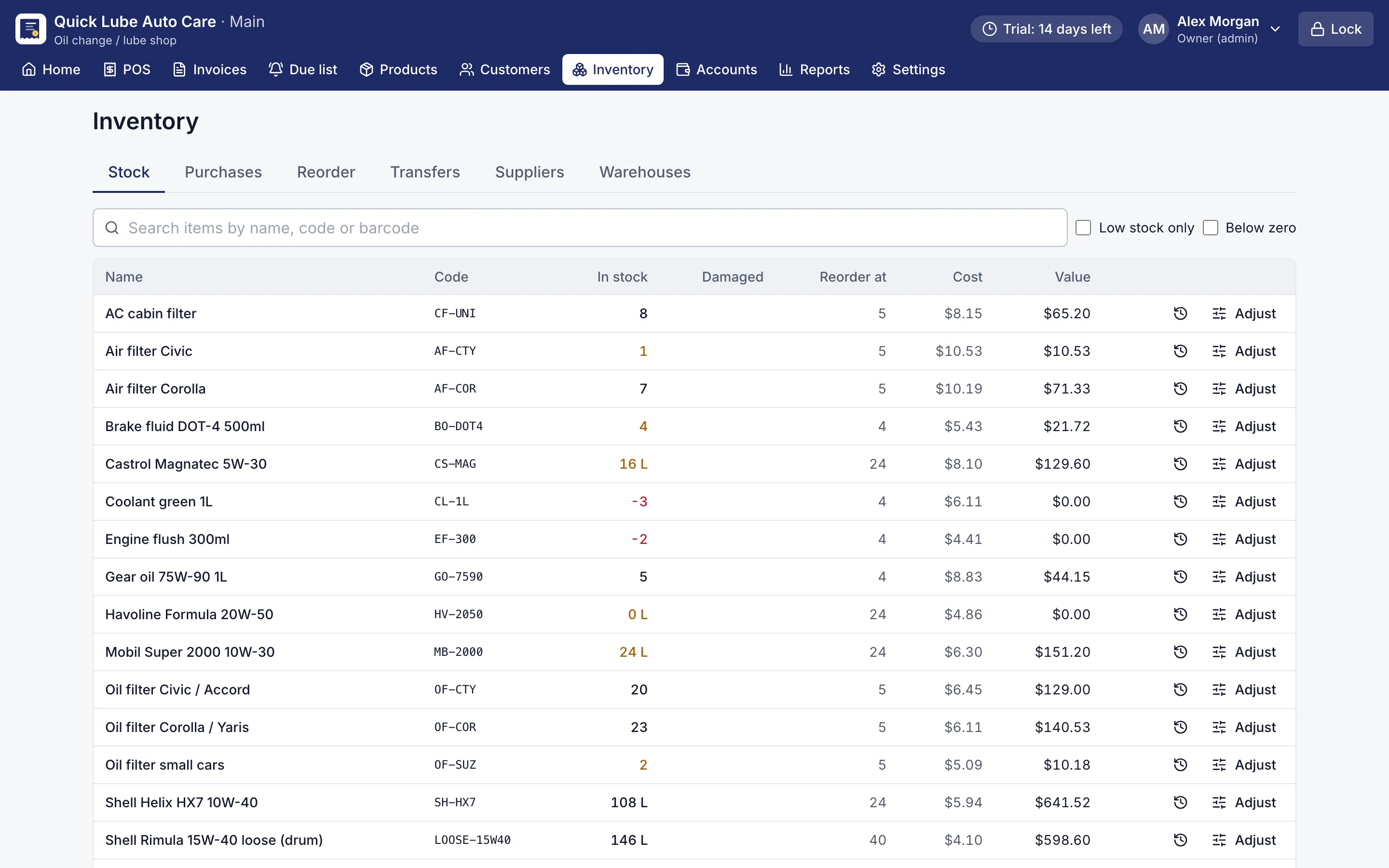
Stock list with quantities, reorder points and low-stock items highlighted
Stock list. Stock in every warehouse, with low-stock and below-zero items flagged.
A5 invoice with the shop's details, customer, vehicle, items and totals
A5 invoice. A4, A5 or A6 invoices with your logo, tagline and footer.

Questions shop owners ask

Can I sell wire by the metre or foot and nails by the kg or lb?

Yes. Set the unit on the product and sell any quantity, such as 2.5 metres or 1.25 kg. With loose units, a coil or sack is opened as a pack and its metres, feet, kilos or pounds come into stock at the right cost.

Can I stock paint in litres or gallons and buy boxed items by the carton?

Yes. Paint can be stocked in litres or US or imperial gallons, and boxed items bought by the carton with conversions such as 1 carton = 24 pieces.

Can I search by part number or size?

Yes. Each item can carry its part numbers and rack location, and typing a part number, code, barcode or name finds it.

How do I manage credit for contractors?

Give each contractor a credit limit, put bills on account with a promised date, and receive payments against their statement. Receivables show who owes the most and, with Pro, how old the dues are.

Can I set sales targets for my sales staff?

Yes, with Pro. Set a target per sales person per month in Settings → Targets and see what they sold beside it in the targets report.

Can I print tax invoices for companies?

Yes. A customer with a tax registration number can get a tax invoice with its own number series, using your own tax name (VAT, GST or sales tax) and rate. RMS is not connected to any government e-invoicing or fiscal reporting system.

Other shops RMS is made for

General storeDepartmental storeClothingMobile & electronicsOther retail

Try RMS in your hardware shop

Every Pro feature, no card needed. Keep it from USD 39 a year or pay once for life.

14-day trial · Windows, macOS, Linux · Works offline

Download free trial